29 July 2026
Don't Do it Yourself (DDIY)
Closing the gap between confidence and competence in home repairs.
Some homeowners like to think they have DIY repairs covered - until a 'quick fix' turns into a weekend-long disaster.
While some home repairs are manageable with a toolbox, a video tutorial, and a bit of courage, others carry far more risk than many Brits realise. The line between a successful DIY repair and a costly disaster is often thinner than you think.
To uncover which home repairs Brits are most likely to overestimate, we surveyed 2,000 nationally representative UK adults on the jobs they felt confident tackling, versus those where disaster struck.
We also spoke with our own panel of Ding expert engineers, who shared which home repair jobs are best left to the professionals, to avoid a small issue turning into a very expensive one.
Calculating confidence versus competence in DIY
For many homeowners, self-repairs are a practical way to save money and stay on top of everyday home maintenance. However, a problem quickly emerges when confidence exceeds competence.
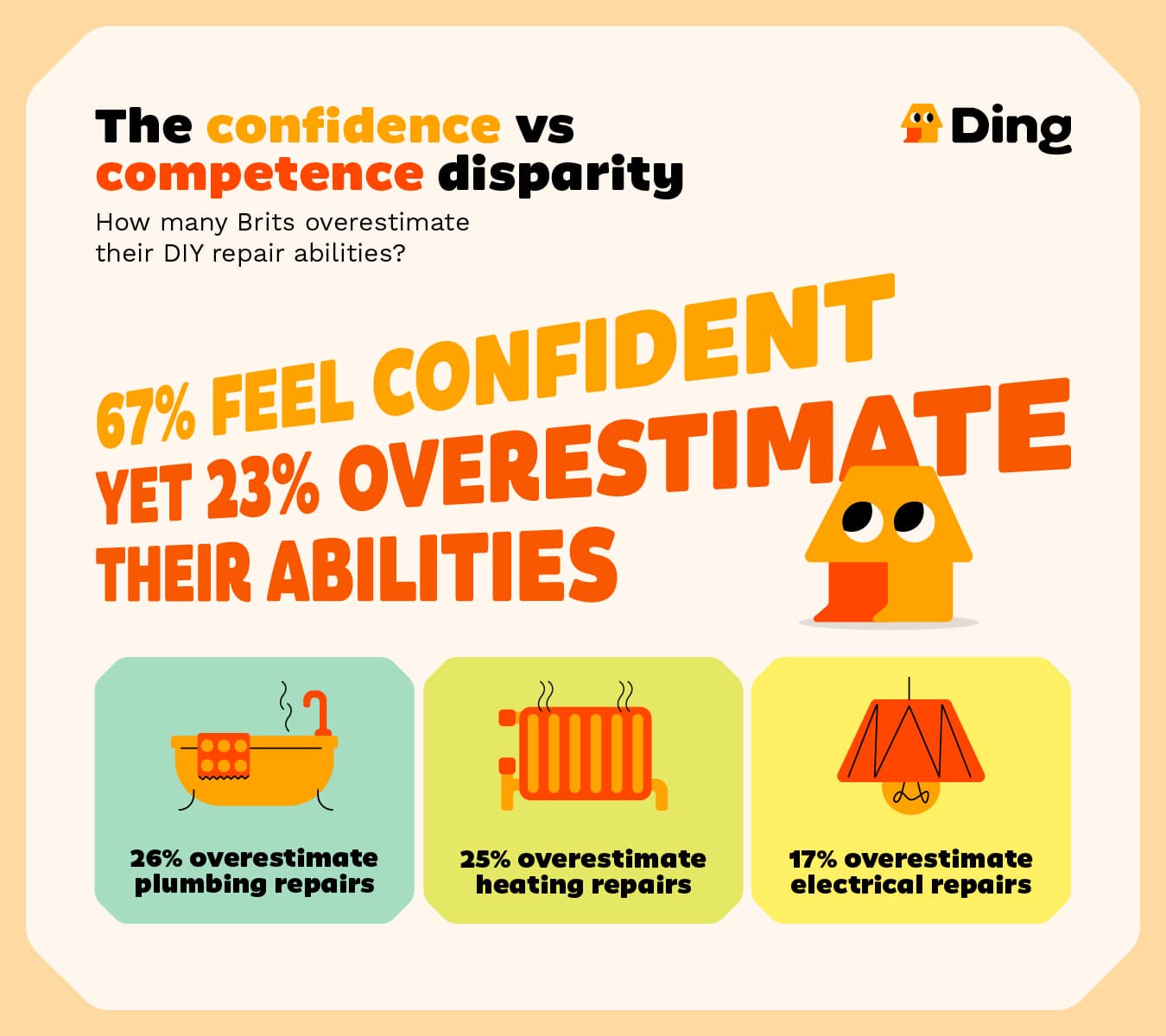
Brits certainly don’t lack confidence when it comes to DIY. In fact, our data revealed that 67% believe they’re more than capable of tackling home repairs themselves. But this confidence doesn’t always translate into success. Diving deeper into our data, our calculations estimate that nearly a quarter (23%) of homeowners may be overestimating their DIY abilities.
Put the wrench down: Plumbing named the riskiest DIY job in the UK
Feeling confident with a toolbox doesn't guarantee a successful repair. We analysed the jobs homeowners were most confident attempting themselves against those most likely to require a second fix or professional intervention, revealing the UK's riskiest DIY repairs.
Breaking down the data by repair type, plumbing came out as the area Brits are most likely to get wrong, with an average failure rate of 26%. Out of all plumbing DIY jobs, those with the highest failure rates were found to be:
Replacing a water stopcock (40%)
Repairing a running toilet (34%)
Repairing a leaky pipe (33%)
Fixing a dripping tap (29%)
Resealing a bath/shower (23%)
Following plumbing was heating repairs, with an average failure rate of 25%, while electrical jobs had a slightly lower failure rate of 17%.
The top five most overestimated repair jobs
The biggest DIY confidence gaps emerge when it comes to specific repair jobs, with some tasks catching homeowners out far more than others.
Repair task | Failure rate | The consequences |
Replacing a stopcock | 40% | Total loss of emergency water shutoff control. |
Replacing a radiator | 38% | System pressure loss and water leaks. |
Repairing a running toilet | 34% | Increased water wastage and potential for higher utility bills. |
Replacing a wall socket | 33% | Possible fire hazards and home insurance invalidation. |
Fixing a dripping tap | 29% | Permanent fixture damage and potential for higher utility bills. |
Younger generations use socials over handbooks - but are most likely to struggle with DIY failures
The results also reveal a striking experience gap among generations, with younger people almost three times more likely to see their DIY repair attempts end in disaster.
And perhaps it’s where Brits learn their DIY skills that make all the difference. Younger generations are four times more likely than older generations to turn to social media for repair advice, trading traditional instruction manuals for 30-second hacks and quick-fix videos.
The top five DIY jobs that cost the most to fix
Speaking with our panel of trade professionals, the message was clear: DIY repairs rarely save money if they end in disaster. In fact, they usually end up costing more than the original job would have if something goes wrong.
On average, our research found that correcting a botched home repair adds an extra 24% to the final bill, turning a would-be cost-saving self-repair into a potentially expensive fix.
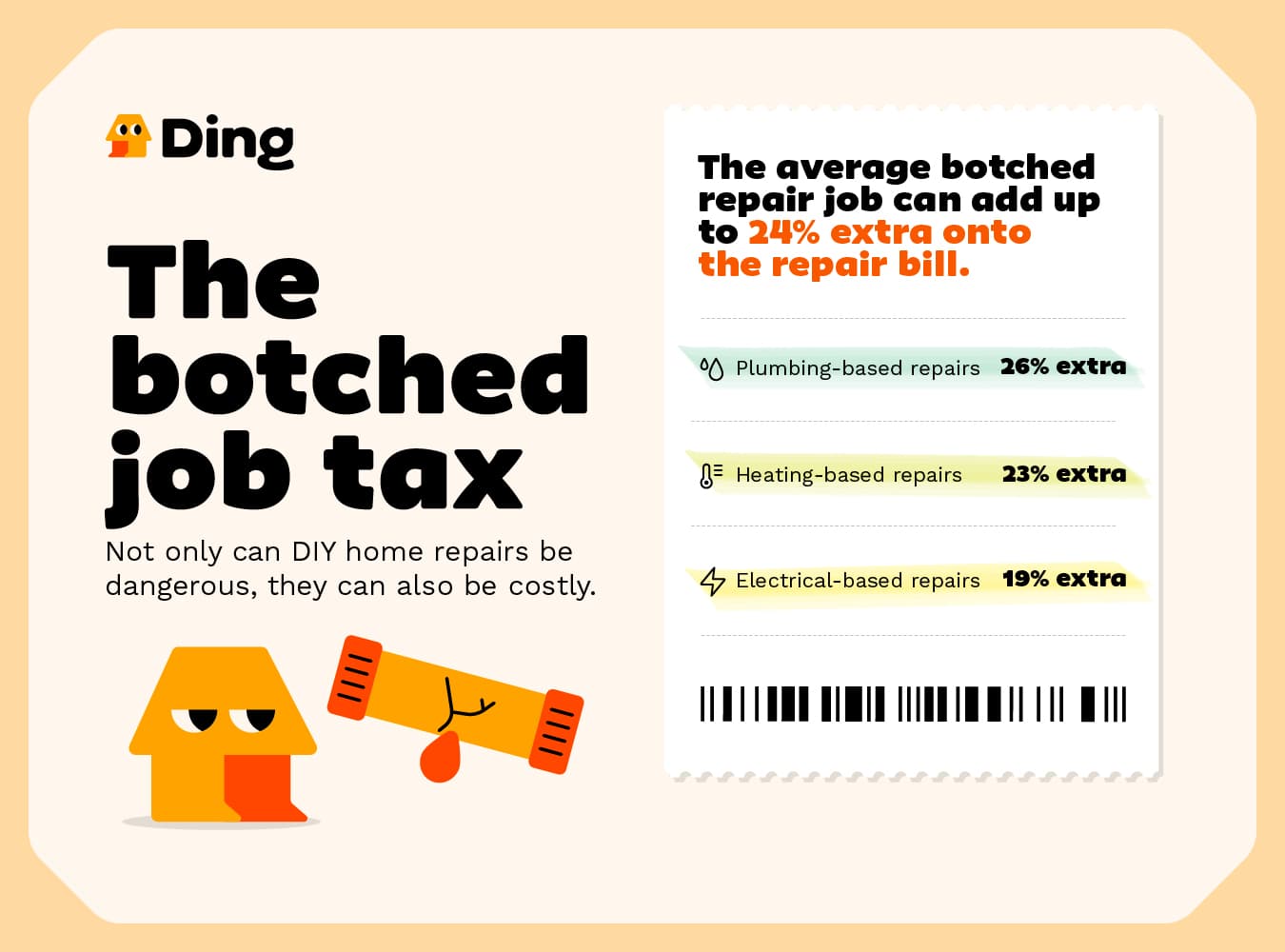
Plumbing repairs top the list as the costliest jobs to get wrong, with fixing a botched attempt adding an average of 26% to the final bill. Heating repairs aren’t far behind, adding an average of 23% extra when things go sideways, while electrical mishaps increase costs by around 19%.
In other words, the wrong DIY move doesn’t just create more work; it can make the repair bill snowball fast.
Based on our research, we've analysed repair costs to find the biggest price increase when a job was botched:
Replacing a radiator - up to £90 extra
Replacing a shower unit - up to £72 extra
Replacing a water stopcock - up to £66 extra
Unclogging drains - up to £47 extra
Unclogging a toilet - up to £45 extra
The home repair jobs to leave to the professionals
Understanding the risk is one thing, but knowing where to draw the line is another. Attempting more complex jobs without the right experience may actually make the problem worse, leading to higher costs and serious safety risks.
Below, three of our experts outline the home repair jobs that should always be left to professionals and why.
Plumbing repairs
Attempting DIY plumbing repairs may lead to costly water damage if minor leaks turn into major floods. Some repairs may require compliance with Building Regulations and other Approved Codes of Practice (ACoP).
Richard Bloor, Service Excellence Coach at Ding, says:
Replacing an electric shower: “This is a high
-stakes balancing act. It requires watertight sealing and an understanding of water pressure. Done wrong, you’re looking at risk of scalding or even electric shocks.”Repairing a leaky pipe: “A quick fix often masks a root cause. Improperly fitted pipes could result in mould growth and flooding behind walls where you can’t see it.”
Replacing a water stopcock: “This is your home’s water supply ‘off switch.’ If this is unsatisfactory, you lose the ability to stop a flood in an emergency. New fittings also need to meet legal and safety standards to ensure you don’t contaminate the water supply.”
Electrical repairs
DIY electrical repairs without proper training could result in severe shock or electrocution, with incorrectly wired outlets, switches, or lighting posing a serious fire safety risk in the home as well.
Sam Starbuck, Electrical Technical Governance at Ding, explains:
Replacing a light switch: “Incorrect handling and installation may lead to electric shocks, short circuits, or faults that increase the risk of fire due to improperly secured wires.”
Replacing a wall socket: “Incorrect wiring, loose connections, and brittle insulation may increase the risks of electrocution. Improper repairs may also invalidate your home insurance due to the risk of fire.”
Heating
Attempting DIY heating or boiler repairs can be dangerous and illegal, as gas appliances require specialised, certified training to prevent escapes of gas, release of fumes or fire risk. You should always call a Gas Safe Registered engineer if you hear strange noises, or experience a total loss of heating and hot water. If you smell gas immediately contact the Gas Emergency Service Provider on 0800 111 999.
Martin Garbutt, Head of Technical Governance at Ding, says:
Gas Work (i.e. servicing or installing a gas boiler): “To ensure safety and component cleanliness, boilers require annual professional servicing. In the UK, this must legally be performed by a Gas Safe registered engineer to ensure the unit remains safe for use.”
Replacing a radiator: “Improper installation can result in water damage from leaks and significantly reduced heating efficiency. Furthermore, inappropriate fittings can cause further water leaks and reduce the efficiency of the heating system.”
Don’t wing it. Ding It
We understand the frustration that comes with unexpected repairs, especially when needing to find a reliable contractor.
With the Ding app, that hassle is taken out of your hands, connecting you with trusted experts in minutes
If you’re unsure about tackling a repair yourself, it's always better to call in a professional before a small issue turns into a bigger problem.
Sources and methodology
Sources mentioned
A nationally representative survey of 2,000 Brits via Censuswide was conducted in May 2026. These results were then shown to a representative panel of Ding tradespeople specialising in electrical, plumbing, and heating repairs to give their collective, professional opinions. Price quotes were taken from the Ding website.
Meet the experts

Martin Garbutt
Head of Technical Governance
Martin is an Incorporated Engineer (IEng) spanning regulatory, government, and private sectors. A fellow member of the Institution of Gas Engineers and Managers (IGEM) and a specialist gas incident investigator, he maintains a proven track record of competence in domestic, non-domestic, and LPG gas installations.

Sam Starbuck
Electrical Technical Compliance
Sam brings over 30 years of expertise in electrical repairs and installations across domestic, commercial, and industrial projects. Now an electrical expert for Ding’s Technical Governance Team, he focuses on ensuring technical accuracy and industry compliance across all company operations.

Richard Bloor
Service Excellence Coach
Richard combines two decades of technical plumbing and drainage expertise with a decade of leadership at Ding. As a Service Excellence Coach, he provides practical guidance and mentorship to UK-wide teams, translating his years of field experience into high-quality service standards and rigorous operational compliance.
Whatever your job—just Ding it.
Become a member today
For just £5/month and get direct access to trusted plumbers, electricians, and gas engineers—ready to tackle your immediate and future repairs.